
Kintsugi (Japanese Art of Ceramic Repair)
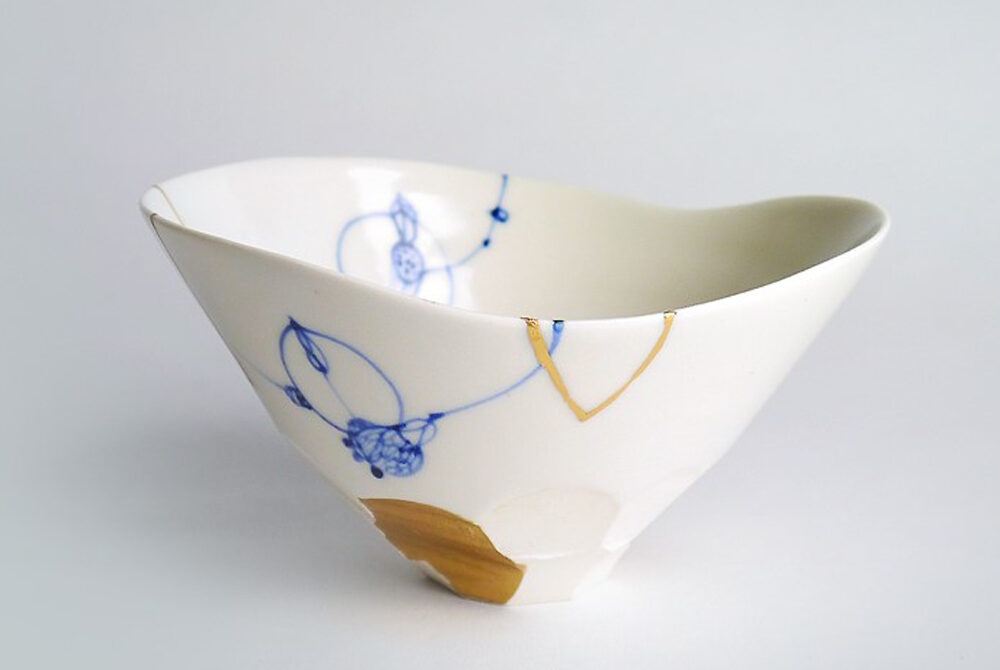
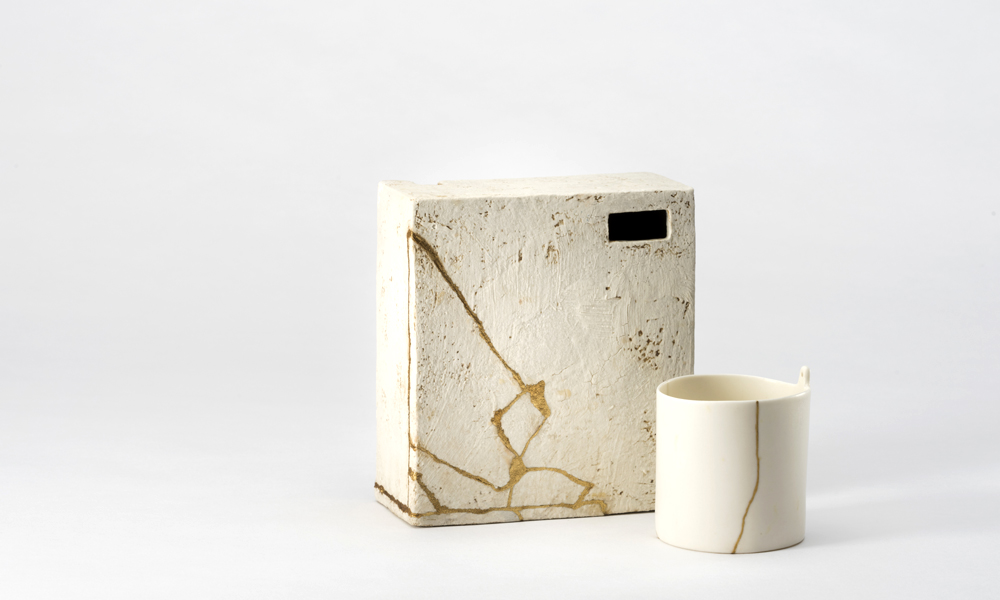
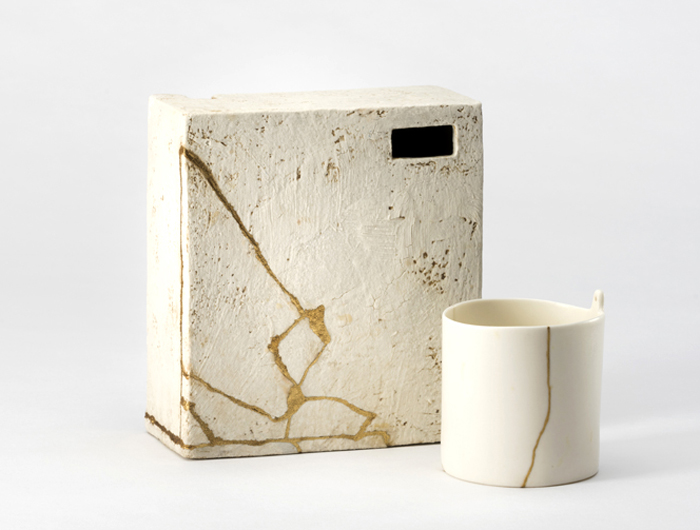
Typically, the process of repair begins because a vessel has broken. For Matsui, however, the origin of her fascination with Kintsugi lay in the creation of her graduation series, "Scar." At the heart of Kintsugi is an aesthetic that does not seek to hide a repair, but rather celebrates the "wound" by dusting it with gold—embracing the object’s imperfections as a whole. In traditional ceramics, it is customary to wipe away any excess slurry (liquid clay) that seeps from a joint. Matsui, however, chose not to remove it, instead accepting and presenting the overflow as a deliberate "scar." Realizing that this artistic experiment resonated perfectly with the philosophy of Kintsugi marked the beginning of her lifelong exploration of the craft.
Since childhood, caring for objects, repairing broken things, and tailoring or mending her own clothes have been a natural part of Matsui’s daily life. Repairing her own vessels or sculptures by hand felt like a completely instinctive act. Eventually, this daily practice of mending fabric evolved into a new artistic inquiry: "repairing ceramics with cloth." The use of thread and fabric in Matsui’s work is rooted in these memories of restoration from her everyday life, representing a bold challenge to convention and a departure from traditional boundaries.
金継ぎ(日本独自の陶器の修復法)
器が割れたから修復、というのが普通の順番ですが、松井の場合は、自身の美大での卒業作品「Scar(傷跡)」シリーズの制作こそが、金継ぎに惹かれた原点でした。金継ぎの根底には、修復した割れ目を隠すのではなく、金粉を蒔いてその「傷」を慈しみ、不完全なものを受け入れるという美学があります。通常、陶芸における泥漿は、継ぎ目から溢れた場合はきれいに拭き取るのが通例ですが、彼女は、溢れ出た泥漿をあえて拭い去らず、それを一つの「傷跡」として受け入れ、見せようとしました。この試みが、まさに金継ぎの哲学と共鳴していることに気付いたのが、彼女の金継ぎへの探求の始まりでした。
幼少期から、物を大切に使い、壊れたら修理し、服を自分で仕立てたり直したりすることは、松井にとって日常の一部でした。器やオブジェが壊れた際、それを自らの手で修復することもまた、極めて自然な行為でした。やがて、衣服を繕うという日々の営みは、「器を布で修復する」という、新たな作品への探求へと繋がっていきます。松井の作品に糸や布が用いられている背景には、こうした彼女の生活に根ざした修復の記憶と、古い伝統に囚われない斬新な挑戦が存在しています。